No leftovers should be wasted. Slow cooked pork can help to spice up noodles or filling for pies.
You may add fish paste and prawns to enhance the flavours.
White cabbage, chives, bean sprouts go well with this stir fry noodle.
Both light soy and dark soy sauces could be used for seasoning.
Pounded or cut chillies at the side for dipping or stirring into the pipping hot noodles.
Here's one rendition.
Welcome! Food has long been recognised as a social vehicle that bonds families, friends and strangers. For anyone who is passionate about food, I hope you would enjoy the selection of dishes documented. Bon Appetit!
Friday, March 20, 2015
Rhubarb crumble
Bringing the aroma and crunch to a higher level: add chopped walnut to rubbed and crumbed butter, flour and castor sugar.
Reduce lumpy base by baking rhubarb briefly with brandied raisin and cherry.
Saturday, August 23, 2014
Indonesian Ayam Kalasan (twice cooked - grill or fried chicken with coconut juice spice marinade)
There are many versions for this Indonesian dish. I believe this one has a good balance of spices and is not too difficult to make.
Ingredients
Whole chicken (or 6 to 8 chicken drumsticks)
Coconut juice (yes, not coconut milk)
Spice & Seasoning
Ground coriander
Ground cumin (a pinch)
Ground turmeric (a pinch)
Nutmeg (a tiny pinch)
Bashed lemongrass (2 stalks)
Galanga (2 slices)
Garlic
Red shallot
Salt
Pepper
Fresh dipping salsa sauce:
Tomatoes, Chilli, Dark Soy sauce, spring onions.
Chop finely and mix well.
Side salad:
Lettuce (buttercut or Italian cos)
Cucumber sliced thinly
Method:
1. Heat oil in frying pan. Fry garlic, shallot, galangal and lemongrass till fragrant.
2. Add dry ground spices. Turn down the heat.
3. Pour in coconut juice (fresh or packed) and bring to the boil.
4. Put in chicken (whole or pieces). Cover and turn down the heat.
5. After 10 minutes, remove chicken from the pot and drain excess stock.
6. Rest the meat for at least 5 - 10 minutes.
7. Meanwhile, heat up the grill. Alternatively, you may pan fry or deep fry the meat.
8. Fry or grill on both sides till golden brown.
9. Serve with steamed rice (coconut, pandan or saffron), salsa dip and salad (ingredients as above) and spicy soup. Yes!
* Bonus dish: drain the spices from the marinade/chicken stock.
Add cubed carrots, potatoes and onions and bring to the boil. Viola!
* Note: this is the "reverse" process of the Vietnamese coconut juice chicken which I will be sharing with you soon.
Snow fungus, papaya, double boiled with milk
The recipe for this nutritious dessert available in well known speciality sweet restaurants is actually very easy to follow. Cooked in a baine marie, the essential vitamins and nutrients are preserved and prevents the milk from overboiling.
The combination of fungus and papaya is said to enhance complexion, helps in digestion and build up immunity against flu.
Firstly, pre-soak 2 whole florets of snow fungus (from Asian grocery or traditional medicine store). When the fungus has expanded (takes about 10 minutes), snip off the dirt and yellowish portions.
Prepare double boiler with hot water at the base and pot for cooking above. This could be improvised by using a slightly larger pot at the bottom and stack another pot on top.
Bring fungus with just enough water to cover it to the boil. Let it cook for another 10 minutes.
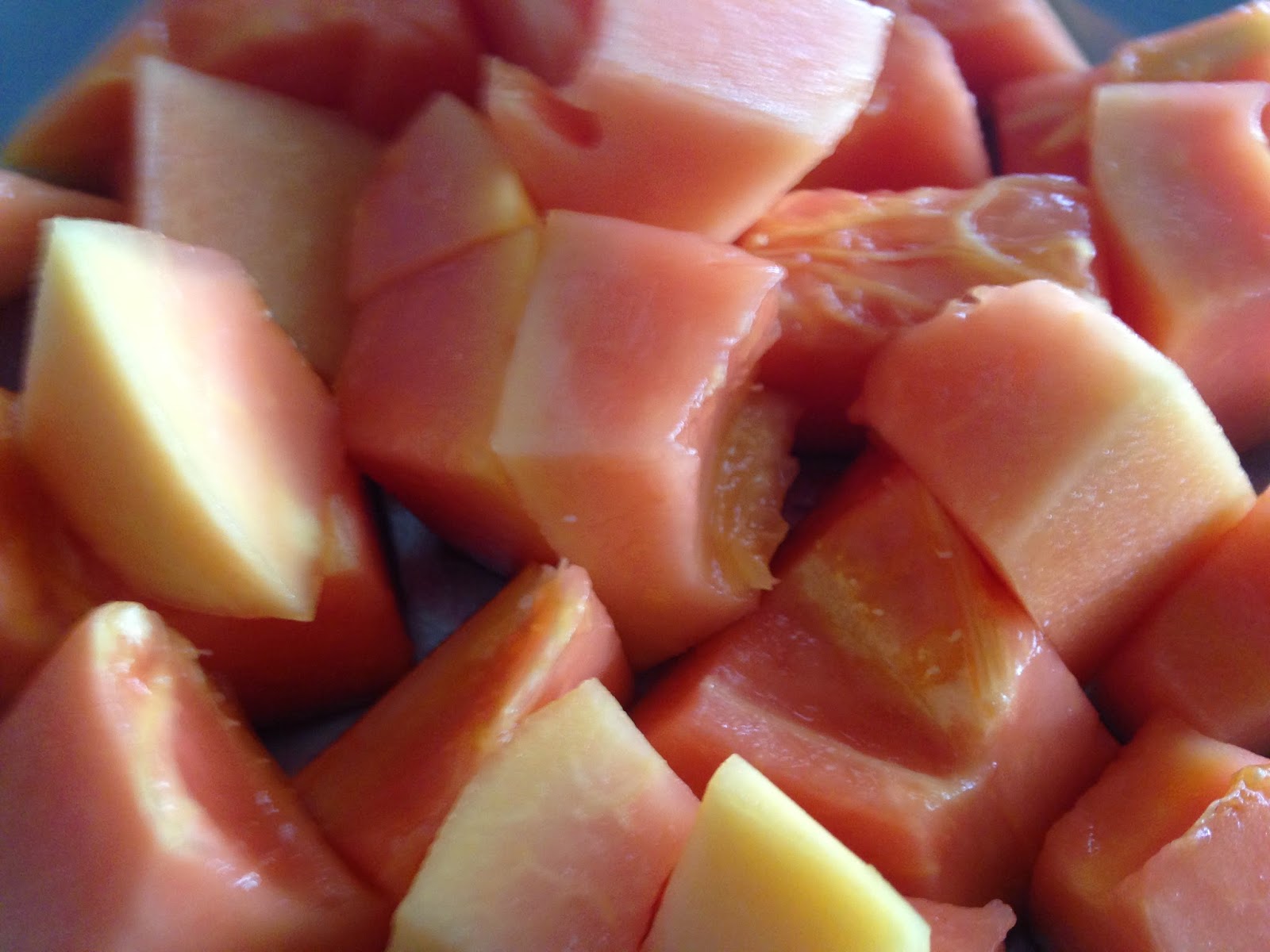
Add papaya cubes and milk (amount would be according to the number of servings).
Add rock sugar last (about 1 cup to 1 litre for moderate sweetness).
Simmer for another 15 minutes. The entire cooking time is one hour plus 15 minutes of preparation time.
The combination of fungus and papaya is said to enhance complexion, helps in digestion and build up immunity against flu.
Firstly, pre-soak 2 whole florets of snow fungus (from Asian grocery or traditional medicine store). When the fungus has expanded (takes about 10 minutes), snip off the dirt and yellowish portions.
Prepare double boiler with hot water at the base and pot for cooking above. This could be improvised by using a slightly larger pot at the bottom and stack another pot on top.
Bring fungus with just enough water to cover it to the boil. Let it cook for another 10 minutes.
Add papaya cubes and milk (amount would be according to the number of servings).
Add rock sugar last (about 1 cup to 1 litre for moderate sweetness).
Simmer for another 15 minutes. The entire cooking time is one hour plus 15 minutes of preparation time.
Friday, August 15, 2014
Fried Rice Noodles: Char Kway Tiao (kwai tew) tropical style
Char Kway Tiao (also known as kwei teow or kwai tew) is a challenging task due to the demand to control the and retain the integrity of the noodles at the same time. Hopefully, this would help you to succeed in whipping up dishes of the noodles that have become very popular in all parts of the world.
This recipe would be sufficient for a family of four.
The main and must have ingredients are:
Thick Rice Noodles (300g)
Yellow Hokkien or similar wheat noodles (200 g)
Chinese rose meat sausages (sliced thinly)
Prawns - devined and sliced in the middle
Mustard green or choy sum or baby kai lan - wash, separate and slice
Garlic chives
Bean sprouts (80g) rinsed and drained well
Garlic
Cooking Oil
Eggs (3 - 4)
Dark soy sauce
Light soy sauce
Chilli paste (optional)
1. Start frying the garlic in oil till fragrant. Put in sausage and prawns. Do not overcook.
2. Increase the heat over the frying pan. Add yellow noodles, followed by rice noodles and green vegetables and stir well. (If using chilled noodles, steam it till slightly soft and warm 10 minutes before frying. If using dried noodles, blanch in warm water for 5 minutes and drain well before hand. The worst thing to have are half cold noodles on the plate.)
3. Add some light soy sauce to taste. (Leave dark soy sauce till the end to avoid burning)
You could either add chilli at this stage or leave it at the side for individuals to help themselves.
4. Make a well in the centre and break the eggs. Stir quickly to ensure the slightly cooked egg is spread evenly to all the noodles.
5. Add garlic chives. Then add beansprouts last.
Tips: To avoid noodles sticking to the bottom of the pan, one way is to add oil as the frying progresses. However, a healthier way is to use a good quality non-stick pan to reduce the amount of oil needed.
Water is sprinkled if there is a need to soften the noodles further.
A helpful tool to have is a long pair of bamboo chopsticks on one hand and a light slotted wooden spatula on the other hand to stir the noodles without breaking them to pieces.
Be quick and do not spend too much time pondering and waiting. This is a quick stir fry using strong heat.
Note: Though both are former British Straits Settlement ports, the main difference between the Penang fried rice noodles and Singapore fried noodles is the latter use more dark soy sauce. Also, Penang version uses only rice noodles of the thinner width and omits yellow wheat noodles. Traditionally, street food sellers add cockles (clams) and lots of chilli paste to their already fiery fare.
This recipe would be sufficient for a family of four.
The main and must have ingredients are:
Thick Rice Noodles (300g)
Yellow Hokkien or similar wheat noodles (200 g)
Chinese rose meat sausages (sliced thinly)
Prawns - devined and sliced in the middle
Mustard green or choy sum or baby kai lan - wash, separate and slice
Garlic chives
Bean sprouts (80g) rinsed and drained well
Garlic
Cooking Oil
Eggs (3 - 4)
Dark soy sauce
Light soy sauce
Chilli paste (optional)
1. Start frying the garlic in oil till fragrant. Put in sausage and prawns. Do not overcook.
2. Increase the heat over the frying pan. Add yellow noodles, followed by rice noodles and green vegetables and stir well. (If using chilled noodles, steam it till slightly soft and warm 10 minutes before frying. If using dried noodles, blanch in warm water for 5 minutes and drain well before hand. The worst thing to have are half cold noodles on the plate.)
3. Add some light soy sauce to taste. (Leave dark soy sauce till the end to avoid burning)
You could either add chilli at this stage or leave it at the side for individuals to help themselves.
4. Make a well in the centre and break the eggs. Stir quickly to ensure the slightly cooked egg is spread evenly to all the noodles.
5. Add garlic chives. Then add beansprouts last.
Tips: To avoid noodles sticking to the bottom of the pan, one way is to add oil as the frying progresses. However, a healthier way is to use a good quality non-stick pan to reduce the amount of oil needed.
Water is sprinkled if there is a need to soften the noodles further.
A helpful tool to have is a long pair of bamboo chopsticks on one hand and a light slotted wooden spatula on the other hand to stir the noodles without breaking them to pieces.
Be quick and do not spend too much time pondering and waiting. This is a quick stir fry using strong heat.
Note: Though both are former British Straits Settlement ports, the main difference between the Penang fried rice noodles and Singapore fried noodles is the latter use more dark soy sauce. Also, Penang version uses only rice noodles of the thinner width and omits yellow wheat noodles. Traditionally, street food sellers add cockles (clams) and lots of chilli paste to their already fiery fare.
Subscribe to:
Posts (Atom)