Showing posts with label Korean. Show all posts

Friday, March 29, 2013

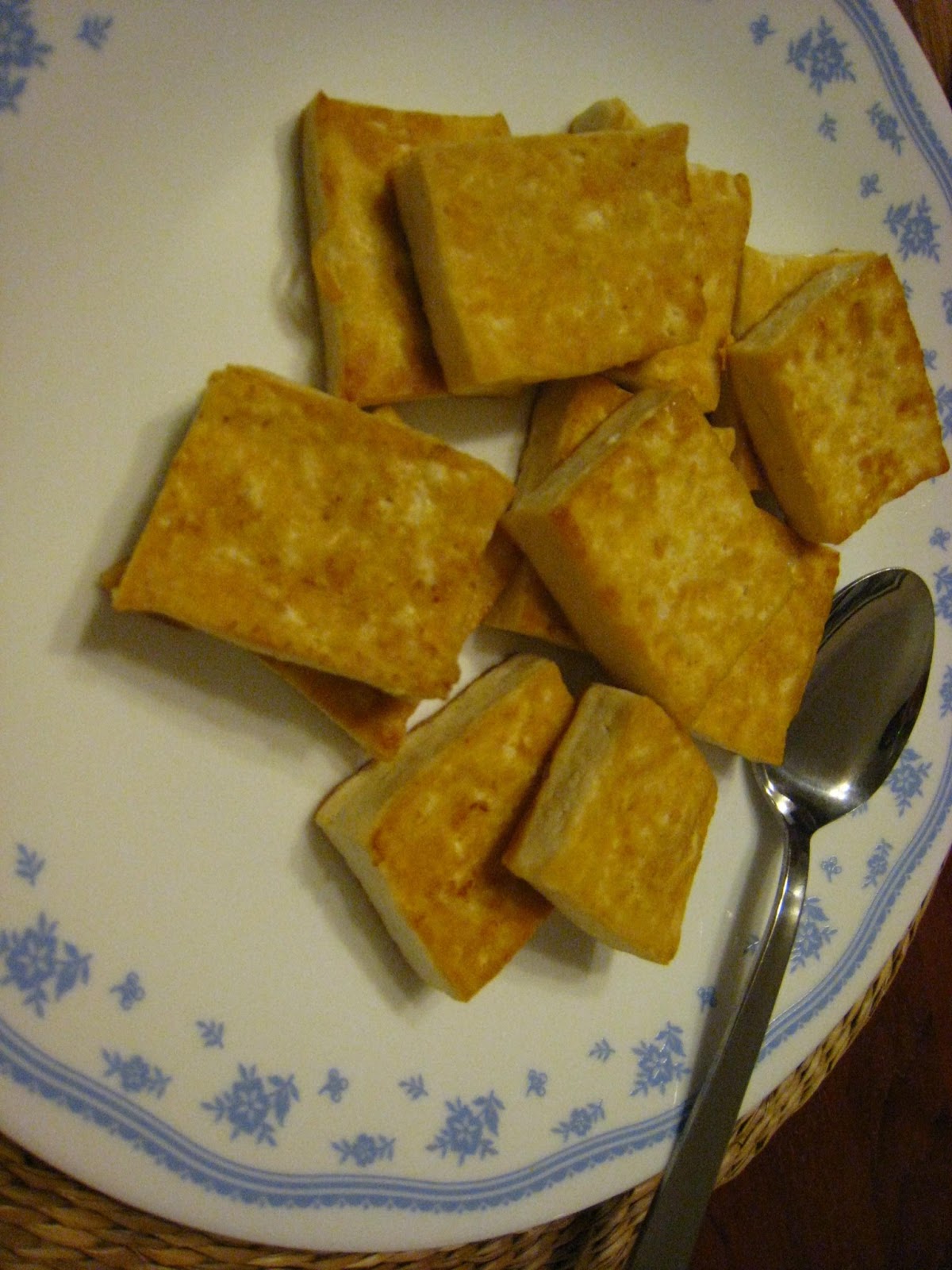
Korean Medium Soft Tofu for Frying

This is the first time I'm trying out Korean tofu specially made for frying. They are priced slightly higher and the portion are less than the other brands of tofu I'm used to.

The more affordable versions are sold by at least three or four different manufacturers based in Australia and are more widely available in Asian groceries or supermarkets.


However, as with most tofu, you'd need to handle the tofu with greater care as they are more delicate and softer. Secondly, the water which the tofu is soaked in to maintain freshness must be totally discarded. Thirdly, it would make frying easier if you were to sprinkle some salt and coat with all-purpose flour just before frying it in the pan.

With the Korean tofu, I did not coat it with flour, just a sprinkling of fine sea salt to prevent splattering of oil.

Friday, August 24, 2012

Silkworm in spicy laksa soup - twist to exotic Northeast Asian / Far East delicacy

I learned recently that silkworm is the staple food in Northeast China, Korea, Far East Russia, Japan and northern Thailand.

Outside its natural habitat, adventurous foodies can only get hold of canned or frozen versions. 

Traditionally, silkworm is supposed to be stir fried. Since the canned silkworm was not popular, judging by the amount of leftovers, this creative home-cook has to reinvent and make an interesting dish. The solution : adding silkworm to laksa noodle soup! 


In Southeast Asia, cockles (mud clams) are added to laksa for a special shellfish zing. Silkworm really does the trick here. It brings out the special flavour in laksa. 

A recipe for easy preparation of coconut based laksa will be provided shortly (note : not the same as tamarind fish laksa or curry flavoured mee soup versions). 

Silkworms are nutritious and do not add much to carbon emissions. These creatures feed on mulberry, leaves of a delicious fruit quite similar to raspberry except larger and of a darker color. 

Researchers have recommended adding silkworm pupae for a higher protein diet, especially for hikers and astronauts. It is not that squirmish once you get over the mental barrier. 

Wednesday, April 29, 2009

Korean Seafood Pancake - Haemul Pajeon - crispy outside, tender inside

Many of us who love Korean cuisine would probably name seafood shallot pancake as one of the favourites.


If you like have a quick fix at your home kitchen to satisfy your sudden craving for seafood pancake during the cold months, here are some tips :

Korean cooks would add some baking powder, rice flour, mung bean flour to all purpose or self raising flour, egg and cold water to make the batter.

Add beaten egg. Season with salt and pepper.

Ensure that the flour is well combined, but not too fluid.  Neither should it be dry and hard as a dough.

Pour a thin layer of mixture on a  non-stick or well greased frying pan.  Cast iron hot plate conducts heat very well and makes the pancake crispy. However, using Korean magic stone frying pan requires less oil and is a healthier option.

Add seafood. Then pour the rest of the batter.

You'll need medium high heat to sizzle the egg pancake till it's crispy on the outside but remains soft and juicy within. Flip over and cook briefly for2 minutes. Turn off the heat and let the pancake rest for another 2 minutes.

To prepare dipping sauce : soy sauce, vinegar, spring onion, sliced green and red chillies.

It's easy to cook, no fuss, no mess.