Welcome! Food has long been recognised as a social vehicle that bonds families, friends and strangers. For anyone who is passionate about food, I hope you would enjoy the selection of dishes documented. Bon Appetit!
Friday, March 20, 2015
Spaghetti melon or sharksfin squash
This vegetarin soup is a superior alternative. Tasty and nutritious.
Cut melons into large slices. Put into boiling tasty stock (beans, fish, chicken, as you wish). Try to mash the melon as it cooks to produce a stringy consistency. Add thickener if you wish. Season with pepper, salt, ginger slices and fried shallots.
Saturday, May 11, 2013
Goji Soup : goji berries and leafy vegetable for good health
A quick and easy boiled nutrients packed soup of goji (wolfberries) and gao gee (goji vegetable or spinach) is a useful starter of your meal in winter.
Besides breakfast museli, there are some interesting ways one could prepare goji such as steaming with fish, making a drink with chrysanthemum or jelly.
Wednesday, September 19, 2012
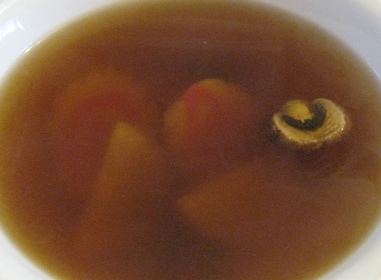
Ways with Daikon/White Radish #1 Winter Beef Mushroom Ginger Daikon Soup
Saturday, September 1, 2012
Gaeng Liang - Thai special vegetable soup for health
The must-have basic ingredients are :
lufa (angled gourd) - cut into cubes
pumpkin - cut into bite size
mushroom (preferably straw mushroom, canned if not fresh, or else use fresh button mushroom),
baby sweet corn
green zucchini (optional)
Spicy paste : Pound -
peppercorn, fresh prawn, garlic, coriander root, shallot bulb, fresh red chilli, dried shrimp or shrimp paste.
Traditionally, this herbal soup is supposed to be quite peppery. Adjust the fiery level accordingly. Cut down on the chilli and peppercorn if you like it mild.
Seasoning : fish sauce (2 Tbs).
1. Bring 4 cups of chicken stock to the boil.
2. Add spicy paste and stir well.
3. When the stock is boiling again, add pumpkin first as it takes longer to cook.
4. Add lufa, then mushroom and zucchini. Lastly add baby sweet corn.
5. Season with fish sauce.
6. Serve hot with rice. Garnish with basil leaves.
Friday, August 24, 2012
Silkworm in spicy laksa soup - twist to exotic Northeast Asian / Far East delicacy
Outside its natural habitat, adventurous foodies can only get hold of canned or frozen versions.
Traditionally, silkworm is supposed to be stir fried. Since the canned silkworm was not popular, judging by the amount of leftovers, this creative home-cook has to reinvent and make an interesting dish. The solution : adding silkworm to laksa noodle soup!
In Southeast Asia, cockles (mud clams) are added to laksa for a special shellfish zing. Silkworm really does the trick here. It brings out the special flavour in laksa.
A recipe for easy preparation of coconut based laksa will be provided shortly (note : not the same as tamarind fish laksa or curry flavoured mee soup versions).
Silkworms are nutritious and do not add much to carbon emissions. These creatures feed on mulberry, leaves of a delicious fruit quite similar to raspberry except larger and of a darker color.
Researchers have recommended adding silkworm pupae for a higher protein diet, especially for hikers and astronauts. It is not that squirmish once you get over the mental barrier.
Friday, June 22, 2012
Winter Sweet and Spicy Soup - monk's fruit for cough
The main ingredient is "monk's fruit" also known as luo han guo in Mandarin.
(According to TCM documents, Monk's fruit is a remedy for cough, supposedly neutral, effective for soothing both cooling and heaty cough)
Other ingredients :
4 Honey dates - flat and square shape (preferable to red dates but the latter is fine if the first is unavailable)
6 dried Longan fruit (heaty)
Cinnamon (heaty)
The combination balances the hot and cool properties. While heat elements are necessary to soothe winter cough.
Bring water to the boil. Add honey dates, luo han guo first. The final product looks slightly tan in colour. Do not overcook, i.e., boil for more than 30 minutes.
A similar soup can be improvised for summer cough. Besides monk fruit, the essential ingredient, add more rinsed watercress (vegetable) and winter melon candy. Go easy on the winter melon sugared sticks as they can be very sweet.
For holistic treatment of summer sore throat, heat rash and cough, refer to this pear soup.
http://homecooksecrets.blogspot.com.au/2009/12/cool-sweet-compote-of-snow-fungus.html
Note : natural remedies are for mild colds and coughs.
If the illness is caused by bacteria, it is vital that you seek professional medical advice and prescription for anti-biotics.
Monday, May 14, 2012
Fennel and white bean boiled in pork stock
Grilled pork meat or ribs (leftovers can be used).
Slow cook in 1/2 stock pot of water for at least 2 hours. Skim off impurities and bubbles. Filter and set aside.
Soak white bean for one hour and discard water. If using canned, drain water, rinse with water, drain and set aside.
Meanwhile, cut one fennel into small bite size. Squeeze juice from a small quarter slice of lemon.
Bring the stock to the boil.
Add the beans (when ready) and boil for 5 minutes. Then lower the heat and simmer for 20 minutes.
Add fennel slices. Add garlic, onion and salt. Bring to the boil.
Ready to serve with bread or steamed rice.
Thursday, October 27, 2011
Starting Cold Cuts down Slow Cooking time - secret tip
Sunday, October 16, 2011
Laksa with Cockles
Then comes the tedious part. Do not overcook the cockles. The difficulty lies in most cockles don't open easily unlike clams. They are alright for consumption even if they are closed (not tightly clammed up and impenetrable, pardon the pun).
Cook laksa lemak (the coconut based with moist spices and not the curry powdered version) as per normal. The spice mix (remapah in Malay) comprises ground dried chillies (presoaked, deseeded and cut), tumeric, galangal (blue ginger), lemongrass and small onions. Pounded dried shrimp should be fried separately from the rempah.
Optional are tofu puffs, prawns, chicken slices, beansprouts and cucumber. They enhance the taste of the dish and are recommended if it this is meant to be a main course.
Good quality pure coconut milk or diluted coconut cream is preferable. Compromising on the quality of the coconut milk will debase the taste and enjoyment of this ever popular dish which has gained worldwide reputation.
Tuesday, September 20, 2011
Refreshing Seafood Gumbo Revisited
Tuesday, May 3, 2011
Luffa / Angled Squash / SilkGourd fried with prawn and scrambled eggs
Eggs - 3 large or 4 medium
Prawn - devined and shell removed
Garlic - 2 cloves chopped lightly
Seasoning : soy sauce, oyster sauce, pepper, rice wine
Preparation
1. Cut all the sharp angled edges of luffa first. Then peel the skin. Ensure that the knife is sharp and steady. Remove the large seeds from the core. Leave the smaller seeds attached to the softer portions. Cut into 2 cm slices.
2. Beat the eggs and add seasoning sauces except rice wine.
3. Wash and drain prawn. Add a dash of cooking rice wine (Shaoxing)
Cooking Method
1. Fry garlic in a TBS of cooking oil till fragrant but before turning brown.
2. Stir fry prawn quickly till it just turns pink.
3. Add luffa slices and cook for a minute when it looks slightly soft.
4. Add beaten egg and keep stirring till well mixed. The water from the vegetables should help to form a saucy consistency.
5. The delicious dish is ready to be served as it is now.
6. If you like to make a soup, add chicken stock and bring to the boil.
Optional : steamed pumpkin wedges can be added to make the soup.
Wednesday, November 3, 2010
Fuzhou Peaceful Swallow Meat Dumpling Wanton Soup - Rou Yan Pi Recipe
Only in China and some Southeast Asian countries would you have an opportunity to try this home cooked dish, and only if you have good friends who are willing to make the speciality and even share the recipe with you.
Though it was a long time ago but the flavours still linger in your memories, gladly to be revived. A nostalgic trip down memory lane.
This shop named "Tong Li" in Fuzhou city sells traditional "rouyan" (meat swallow)
Here's how we make it at home?
INGREDIENTS
Yanpi : swallow skin made from ground lean pork, potato and flour, rolled into flat sheets and dried in the sun.
Filling : Fish paste, Prawn (peeled), Minced pork,
Water Chestnut
Seasoning : soy sauce, grated ginger, pepper.
Soup : chicken stock, seaweed, fuzhou fish balls stuffed with minced pork.
STEPS
1. Prepare filling using fish fillet, marbled loin pork (wuhua rou), dried shrimp and Chinese celery.
2. Mince the ingredients. You could either pound with a mortar and pestle, chop using a cleaver or simply blend everything in a food processor.
3. Season with soy sauce, pepper, ginger juice and sugar.
4. Cut yanpi sheets into 2 inch square. (Nowadays, some manufacturers make ready cut yanpi in wanton skin sizes)
5. Place a small amount of filling at the centre of a yanpi square. Hold in one palm and fold inwards to create the shape of a flower or pouch, commonly called "little everlasting spring".
6. Put into boiling water and maintain at medium heat.
7. Boil chicken stock and cook seaweed, coriander, seasame oil, beaten chicken or duck egg.
8. Add cooked yanpi wanton. Heat up briefly and turn off the heat. Ready to be served.
You may be interested in checking out other types of wanton too :
http://homecooksecrets.blogspot.com/2010/07/different-types-of-wanton-dumplings.html
Tuesday, July 13, 2010
Different types of wanton, dumplings, wrappers - Shanghai wanton huntun recipe

Small dumplings called "wan ton" in Cantonese and "hun dun" in Shanghai and Beijing may look and sound similar these delicious morsels are quite different, each vying for the top spot.
Larger dumplings are called "gow gee" (in Cantonese) or "jiaozi" (Mandarin) with more filling enveloped in slightly larger round shaped wrappers.
The first main difference between the northern and southern dumplings is in the wrappers (skin, crepe). Cantonese wrappers typically contain egg and alkaline (hence appear yellow in colour). Northern Chinese use plain wheat flour wrappers which do not have any strong taste.
Filling for Wanton
Minced pork
Chopped prawns (deshell and devein)
Waterchestnut (alternatively, use yam bean)
Chinese parsley (coriander)
Seasoning : salt, soy sauce, pepper, oyster sauce (reduce the amount of sauces if deep frying to avoid burning easily)
Filling for Huntun
Pork mince
Chopped prawn
"River Door" small white green vegetable (Kong Moon Pak Choy)OR
Long yellow Chinese cabbage
(Vegetables have to be chopped finely, dry fried with garlic and drained)
[ Proportion of pork, prawn and vegetable should be 3 : 1 : 2 ]
Green shallot (chop finely)
Ginger : slice thinly
Egg
Sesame oil
Seasoning : soy sauce, salt, pepper.
Mix the meat and prawn well, then add vegetables and continue stirring. Add the egg and combine well.
* The same huntun filling can be used for wrapping Fuzhou "yanpi" - a dry paper like skin made from flour and minced pork.
Wrapping : there are basically two methods
Put a little filling (should not cover more than 1/5 of the wrapper).
(1) either bundle and press to seal.
(2) or fold, roll and tuck in towards the back.
To Cook
1. Boil good quality chicken stock.
2. Add a few drops of vegetable or sesame oil so that dumplings do not stick.
3. Gently place prepared dumplings into the soup. Once the dumplings float to the top of the soup and turns transluscent, lower the heat and simmer for another 2 minutes. Be sure to cook the meat well.
* Note : Hundun can be panfried but rarely deep fried. This is different from "guotie" or pot stickers which is made from a floured dough with different types of filling.
- copyright reserved.
Monday, June 14, 2010
Winter Warmer : Russian Borscht Soup
Saturday, November 14, 2009
Seafoods for tasty soups, congee and porridge
Fresh Seafood
Rock oysters, scallop (fresh with roe or thawed from frozen), fish, abalone and prawns can be made into delicious dish in a short time. Do not overcook the seafood.

Dried seafood
If you prefer a meat or vegetable, dried seafood would greatly enhance the flavour of soups such as wanton noodles, porridge and congee.
The most common dried seafood for flavouring are dried oyster and dried scallop. Sometimes dried shell fish slices are used as they are cheaper options.
Dried scallops must be washed and soaked for a few hours before adding into the porride or congee. Dried abalone are expensive and require a longer time to prepare as they need to be soaked for hours and slow cooked for several more hours and therefore used in specialty soups rather than for daily cooking.
The difference between congee and porridge
From Fujian (Hokkian) and Caozhou (Chewchou or Teochew) are rice porridge. Cook rice with three to five times the amount of water in high heat, half covering the lid. Bring to the boil, uncover and continue boiling for another five minutes. Add ingredients and flavouring. Turn off the heat when all the raw ingredients are well cooked. Ready to serve.
Another way of cooking porridge is to boil the soup and add seasoned meat. If using ribs as the soup base, it must be cooked for at least 2 hours.
Guangdong (Cantonese) style congee requires boiling the rice soup for at least two hours. Lower the heat to medium level once the congee starts boiling. Add ingredients and cook till al dante. A friend's relative who owns a restaurant revealed that adding soy milk at this stage will produce a smooth texture. Then lower the heat further and simmer. Keep the lid covered all the time.
For a writeup on crispy oyster pancake, please refer to :http://homecooksecrets.blogspot.com/2009/10/oyster-egg-pancake-chaozhou-style.html