Back for Visit
A very long silence. Struggling to make a living has taken me away and not having any time to spare. That has not stopped me from cooking, in fact, I am a much better home cook than before.
The opportunity to hone your skills have been forced by the lock down during the pandemic, and juggling work from home and other responsibilities.
The easy way for most people is to post on other more hip social media that attract followers.
Blogs still have their place.
I shall be posting now and then. Thank you for your support and encouragement.
Saturday, June 13, 2020

Sunday, June 7, 2015
Vietnamese fried rice paper spring rolls simply heavenly
Thanks to my Vietnamese friends who are foodies and great traditional home cooks, I have opportunities to cook authentic home style Vietnamese favourites such as "chia gio" (deep fried pork in rice paper rolls).
It is a shame that most so-called Vietnamese nowadays resort to serving cheaper and easier to prepare spring rolls using what flour crepe commonly used in southern Chinese cuisines.
Differences between fried Vietnamese rice rolls and fresh rice rolls (or summer rolls as some call it):
1. Thinner rice paper that is more pliable to roll and doesn't break as easily.
2. No need to soak in hot water. Simply cover with damp cloth sprinkled with some rice wine.
3. Smaller and less filling rolled tightly to ensure that the raw meat is thorough cooked.
Filling
400 g pork mince marinate in soy sauce and pepper
100 g prawn (chop roughly)
Soaked wood ear fungus, slice thinly
Bean vermicelli soaked in warm water
Handful of sliced carrot and cabbage
1 chopped spring onion or garlic chives
Beaten egg
Season with a little salt
Method
Using the special rice paper meant for deep frying, roll prepared meat filling.
Be careful, the rice paper is sticky. Place them apart on greaseproof baking paper.

Deep fry in a heavy pot of hot oil (ideally at 170 degrees) till crispy and meat is cooked.

Drain oil on colander lined with blotting paper (not fluffy kitchen towel) that does not adhere to rice paper.

For balance, wrap hot spring rolls in lettuce (iceberg, cos or buttercup) and different types of mint leaves, dip in chilli fish sauce. Tuck in like the folks in Vietnam would enjoy them.
It is a shame that most so-called Vietnamese nowadays resort to serving cheaper and easier to prepare spring rolls using what flour crepe commonly used in southern Chinese cuisines.
Differences between fried Vietnamese rice rolls and fresh rice rolls (or summer rolls as some call it):
1. Thinner rice paper that is more pliable to roll and doesn't break as easily.
2. No need to soak in hot water. Simply cover with damp cloth sprinkled with some rice wine.
3. Smaller and less filling rolled tightly to ensure that the raw meat is thorough cooked.
Filling
400 g pork mince marinate in soy sauce and pepper
100 g prawn (chop roughly)
Soaked wood ear fungus, slice thinly
Bean vermicelli soaked in warm water
Handful of sliced carrot and cabbage
1 chopped spring onion or garlic chives
Beaten egg
Season with a little salt
Method
Using the special rice paper meant for deep frying, roll prepared meat filling.
Be careful, the rice paper is sticky. Place them apart on greaseproof baking paper.

Deep fry in a heavy pot of hot oil (ideally at 170 degrees) till crispy and meat is cooked.

Drain oil on colander lined with blotting paper (not fluffy kitchen towel) that does not adhere to rice paper.

For balance, wrap hot spring rolls in lettuce (iceberg, cos or buttercup) and different types of mint leaves, dip in chilli fish sauce. Tuck in like the folks in Vietnam would enjoy them.
Saturday, April 11, 2015
Pork crackling guaranteed crispy
Pork crackling should be crispy. If it's chewy, that's not what it's supposed to be and it's an immediate turn off.
After many moons of experimenting and humbly consulting with those who have succeeded, the recipe is now failed proof.
Get good quality piece of pork belly, preferably free range, and pungent free.
Nowadays, some grocers or butchers would score the rind. If not, it is easy to make superficial parallel cuts.
Give yourself at least 3 hours from prep to dining table. Take the chilled meat out of the fridge about 30 minutes before preparation.
1. Pour hot water on the skin. Drain.
2. Measure 1/2 cup of apple cider vinegar and pour on the skin evenly.
3. Pat dry with towel. Sprinkle pepper and spread evenly all round.
4. Rub the skin (not the meat) with a teaspoon of fine salt.
Grill in preheated 250 C oven for at least 60 mins and check if it's almost crackling.
Lower heat to 200 C and bake for another 30 mins.


Rest for 10 mins and cut into slices.
Serve with gravy, sliced shallot and ground garlic chilli.
After many moons of experimenting and humbly consulting with those who have succeeded, the recipe is now failed proof.
Get good quality piece of pork belly, preferably free range, and pungent free.
Nowadays, some grocers or butchers would score the rind. If not, it is easy to make superficial parallel cuts.
Give yourself at least 3 hours from prep to dining table. Take the chilled meat out of the fridge about 30 minutes before preparation.
1. Pour hot water on the skin. Drain.
2. Measure 1/2 cup of apple cider vinegar and pour on the skin evenly.
3. Pat dry with towel. Sprinkle pepper and spread evenly all round.
4. Rub the skin (not the meat) with a teaspoon of fine salt.
Grill in preheated 250 C oven for at least 60 mins and check if it's almost crackling.
Lower heat to 200 C and bake for another 30 mins.
Rest for 10 mins and cut into slices.
Serve with gravy, sliced shallot and ground garlic chilli.
Friday, March 20, 2015
Spaghetti melon or sharksfin squash
Abandon any thoughts of ever eating sharksfin soup to save the mindless killing of sharks.
This vegetarin soup is a superior alternative. Tasty and nutritious.

Cut melons into large slices. Put into boiling tasty stock (beans, fish, chicken, as you wish). Try to mash the melon as it cooks to produce a stringy consistency. Add thickener if you wish. Season with pepper, salt, ginger slices and fried shallots.
This vegetarin soup is a superior alternative. Tasty and nutritious.
Cut melons into large slices. Put into boiling tasty stock (beans, fish, chicken, as you wish). Try to mash the melon as it cooks to produce a stringy consistency. Add thickener if you wish. Season with pepper, salt, ginger slices and fried shallots.
Spinach pasta with grilled fish, pinenut and special white sauce
Grill boneless fresh fish with lots of salt and pepper in a hot pan to bring out the full flavour. Flake and put into a moderate oven of 150 C to keep warm.
Meanwhile, make use of the heat to roast some pinenut with shopped garlic as well.
Boil spinach noodles in salty water with a drizzle of olive oil till al dante.
Deglaze pan (after cooking the fish) with white wine,
Add mushroom and fry briefly. Then add thickening corn flour mixture, capers, spring onion and chopped chilli.

Meanwhile, make use of the heat to roast some pinenut with shopped garlic as well.
Boil spinach noodles in salty water with a drizzle of olive oil till al dante.
Deglaze pan (after cooking the fish) with white wine,
Add mushroom and fry briefly. Then add thickening corn flour mixture, capers, spring onion and chopped chilli.
Fried noodle with extra meat
No leftovers should be wasted. Slow cooked pork can help to spice up noodles or filling for pies.
You may add fish paste and prawns to enhance the flavours.
White cabbage, chives, bean sprouts go well with this stir fry noodle.
Both light soy and dark soy sauces could be used for seasoning.
Pounded or cut chillies at the side for dipping or stirring into the pipping hot noodles.
Here's one rendition.

You may add fish paste and prawns to enhance the flavours.
White cabbage, chives, bean sprouts go well with this stir fry noodle.
Both light soy and dark soy sauces could be used for seasoning.
Pounded or cut chillies at the side for dipping or stirring into the pipping hot noodles.
Here's one rendition.
Rhubarb crumble

Bringing the aroma and crunch to a higher level: add chopped walnut to rubbed and crumbed butter, flour and castor sugar.
Reduce lumpy base by baking rhubarb briefly with brandied raisin and cherry.
Saturday, August 23, 2014
Indonesian Ayam Kalasan (twice cooked - grill or fried chicken with coconut juice spice marinade)
There are many versions for this Indonesian dish. I believe this one has a good balance of spices and is not too difficult to make.
Ingredients
Whole chicken (or 6 to 8 chicken drumsticks)
Coconut juice (yes, not coconut milk)
Spice & Seasoning
Ground coriander
Ground cumin (a pinch)
Ground turmeric (a pinch)
Nutmeg (a tiny pinch)
Bashed lemongrass (2 stalks)
Galanga (2 slices)
Garlic
Red shallot
Salt
Pepper
Fresh dipping salsa sauce:
Tomatoes, Chilli, Dark Soy sauce, spring onions.
Chop finely and mix well.
Side salad:
Lettuce (buttercut or Italian cos)
Cucumber sliced thinly
Method:
1. Heat oil in frying pan. Fry garlic, shallot, galangal and lemongrass till fragrant.
2. Add dry ground spices. Turn down the heat.
3. Pour in coconut juice (fresh or packed) and bring to the boil.
4. Put in chicken (whole or pieces). Cover and turn down the heat.
5. After 10 minutes, remove chicken from the pot and drain excess stock.
6. Rest the meat for at least 5 - 10 minutes.
7. Meanwhile, heat up the grill. Alternatively, you may pan fry or deep fry the meat.
8. Fry or grill on both sides till golden brown.
9. Serve with steamed rice (coconut, pandan or saffron), salsa dip and salad (ingredients as above) and spicy soup. Yes!

* Bonus dish: drain the spices from the marinade/chicken stock.
Add cubed carrots, potatoes and onions and bring to the boil. Viola!
* Note: this is the "reverse" process of the Vietnamese coconut juice chicken which I will be sharing with you soon.
Snow fungus, papaya, double boiled with milk
The recipe for this nutritious dessert available in well known speciality sweet restaurants is actually very easy to follow. Cooked in a baine marie, the essential vitamins and nutrients are preserved and prevents the milk from overboiling.
The combination of fungus and papaya is said to enhance complexion, helps in digestion and build up immunity against flu.
Firstly, pre-soak 2 whole florets of snow fungus (from Asian grocery or traditional medicine store). When the fungus has expanded (takes about 10 minutes), snip off the dirt and yellowish portions.
Prepare double boiler with hot water at the base and pot for cooking above. This could be improvised by using a slightly larger pot at the bottom and stack another pot on top.

Bring fungus with just enough water to cover it to the boil. Let it cook for another 10 minutes.

Add papaya cubes and milk (amount would be according to the number of servings).
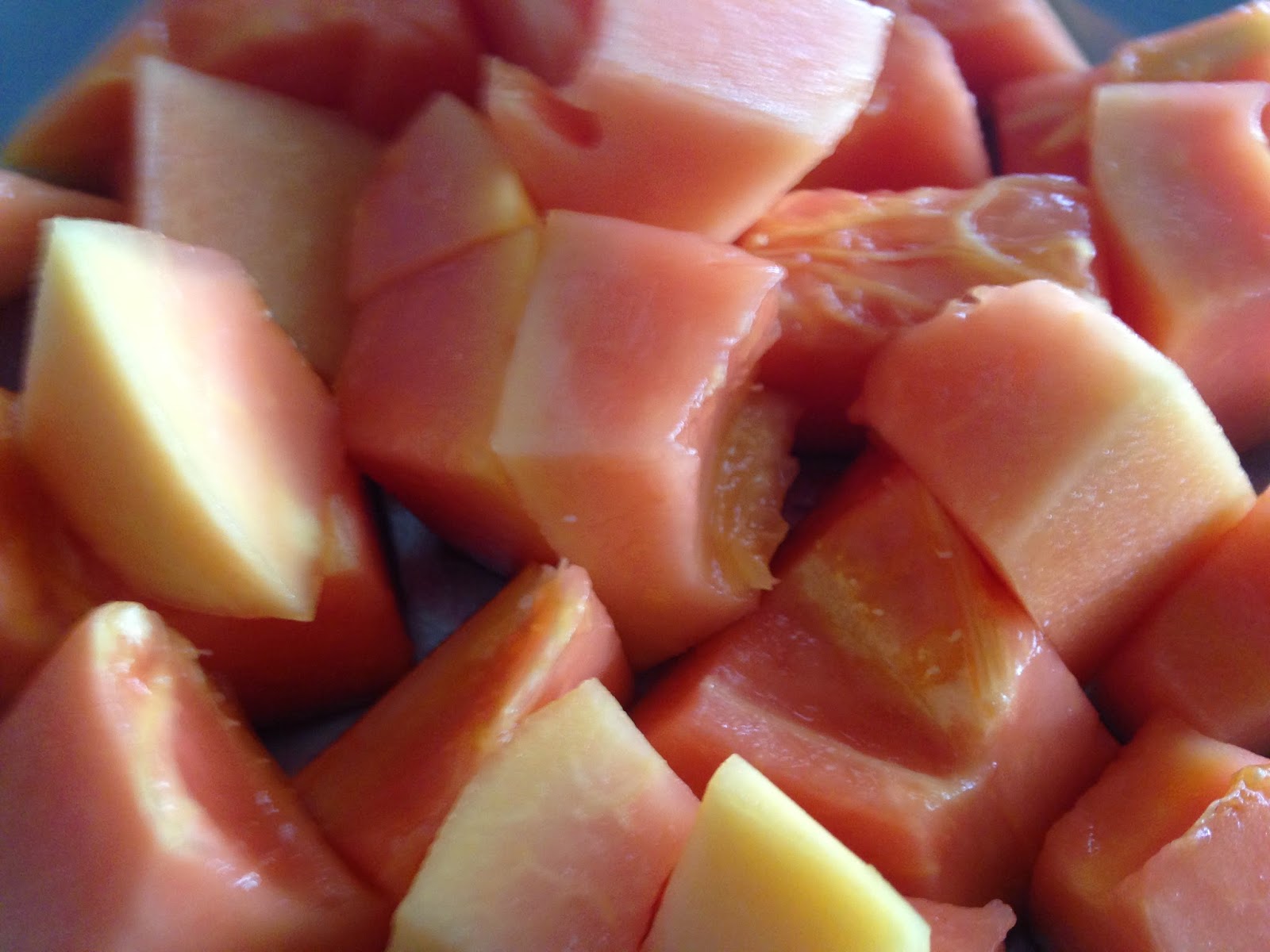
Add rock sugar last (about 1 cup to 1 litre for moderate sweetness).
Simmer for another 15 minutes. The entire cooking time is one hour plus 15 minutes of preparation time.

The combination of fungus and papaya is said to enhance complexion, helps in digestion and build up immunity against flu.
Firstly, pre-soak 2 whole florets of snow fungus (from Asian grocery or traditional medicine store). When the fungus has expanded (takes about 10 minutes), snip off the dirt and yellowish portions.
Prepare double boiler with hot water at the base and pot for cooking above. This could be improvised by using a slightly larger pot at the bottom and stack another pot on top.
Bring fungus with just enough water to cover it to the boil. Let it cook for another 10 minutes.
Add papaya cubes and milk (amount would be according to the number of servings).
Add rock sugar last (about 1 cup to 1 litre for moderate sweetness).
Simmer for another 15 minutes. The entire cooking time is one hour plus 15 minutes of preparation time.
Friday, August 15, 2014
Fried Rice Noodles: Char Kway Tiao (kwai tew) tropical style
Char Kway Tiao (also known as kwei teow or kwai tew) is a challenging task due to the demand to control the and retain the integrity of the noodles at the same time. Hopefully, this would help you to succeed in whipping up dishes of the noodles that have become very popular in all parts of the world.

This recipe would be sufficient for a family of four.
The main and must have ingredients are:
Thick Rice Noodles (300g)
Yellow Hokkien or similar wheat noodles (200 g)
Chinese rose meat sausages (sliced thinly)
Prawns - devined and sliced in the middle
Mustard green or choy sum or baby kai lan - wash, separate and slice
Garlic chives
Bean sprouts (80g) rinsed and drained well
Garlic
Cooking Oil
Eggs (3 - 4)
Dark soy sauce
Light soy sauce
Chilli paste (optional)
1. Start frying the garlic in oil till fragrant. Put in sausage and prawns. Do not overcook.
2. Increase the heat over the frying pan. Add yellow noodles, followed by rice noodles and green vegetables and stir well. (If using chilled noodles, steam it till slightly soft and warm 10 minutes before frying. If using dried noodles, blanch in warm water for 5 minutes and drain well before hand. The worst thing to have are half cold noodles on the plate.)
3. Add some light soy sauce to taste. (Leave dark soy sauce till the end to avoid burning)
You could either add chilli at this stage or leave it at the side for individuals to help themselves.
4. Make a well in the centre and break the eggs. Stir quickly to ensure the slightly cooked egg is spread evenly to all the noodles.
5. Add garlic chives. Then add beansprouts last.
Tips: To avoid noodles sticking to the bottom of the pan, one way is to add oil as the frying progresses. However, a healthier way is to use a good quality non-stick pan to reduce the amount of oil needed.
Water is sprinkled if there is a need to soften the noodles further.
A helpful tool to have is a long pair of bamboo chopsticks on one hand and a light slotted wooden spatula on the other hand to stir the noodles without breaking them to pieces.
Be quick and do not spend too much time pondering and waiting. This is a quick stir fry using strong heat.
Note: Though both are former British Straits Settlement ports, the main difference between the Penang fried rice noodles and Singapore fried noodles is the latter use more dark soy sauce. Also, Penang version uses only rice noodles of the thinner width and omits yellow wheat noodles. Traditionally, street food sellers add cockles (clams) and lots of chilli paste to their already fiery fare.
This recipe would be sufficient for a family of four.
The main and must have ingredients are:
Thick Rice Noodles (300g)
Yellow Hokkien or similar wheat noodles (200 g)
Chinese rose meat sausages (sliced thinly)
Prawns - devined and sliced in the middle
Mustard green or choy sum or baby kai lan - wash, separate and slice
Garlic chives
Bean sprouts (80g) rinsed and drained well
Garlic
Cooking Oil
Eggs (3 - 4)
Dark soy sauce
Light soy sauce
Chilli paste (optional)
1. Start frying the garlic in oil till fragrant. Put in sausage and prawns. Do not overcook.
2. Increase the heat over the frying pan. Add yellow noodles, followed by rice noodles and green vegetables and stir well. (If using chilled noodles, steam it till slightly soft and warm 10 minutes before frying. If using dried noodles, blanch in warm water for 5 minutes and drain well before hand. The worst thing to have are half cold noodles on the plate.)
3. Add some light soy sauce to taste. (Leave dark soy sauce till the end to avoid burning)
You could either add chilli at this stage or leave it at the side for individuals to help themselves.
4. Make a well in the centre and break the eggs. Stir quickly to ensure the slightly cooked egg is spread evenly to all the noodles.
5. Add garlic chives. Then add beansprouts last.
Tips: To avoid noodles sticking to the bottom of the pan, one way is to add oil as the frying progresses. However, a healthier way is to use a good quality non-stick pan to reduce the amount of oil needed.
Water is sprinkled if there is a need to soften the noodles further.
A helpful tool to have is a long pair of bamboo chopsticks on one hand and a light slotted wooden spatula on the other hand to stir the noodles without breaking them to pieces.
Be quick and do not spend too much time pondering and waiting. This is a quick stir fry using strong heat.
Note: Though both are former British Straits Settlement ports, the main difference between the Penang fried rice noodles and Singapore fried noodles is the latter use more dark soy sauce. Also, Penang version uses only rice noodles of the thinner width and omits yellow wheat noodles. Traditionally, street food sellers add cockles (clams) and lots of chilli paste to their already fiery fare.
Sunday, August 10, 2014
Kangkong / Water Spinach / Ong Choy Stir Fry with Sambal Belachan (Malay spicy shrimp paste)
Kangkong has long been considered a humble food for the poor because it can be found growing wild in water logged swampy areas and does not need much attention.
However, if you try to plant this in your garden with the base stems, you must take care to water it everyday. They only grow in summer and withers away during the cold months.
Nowadays, the status of kangkong has been raised to an exotic and popular dish on the menus of many Asian restaurants.

If you can get young and tender water spinach, not much work is needed. Just a rinse. However, if the vegetable is quick big and leafy, cut off the thicker base stems.
To stir fry, one must ensure that the washed vegetables are drained. Water will slow down cooking and hinders the vegetable from getting a fresh sheen from quick frying.
- You could fry a clove of garlic in heated oil to start off.
- Add toasted belachan and pounded fresh chilli followed by the vegetable quickly.
As belachan is salty, do not add salt or soy sauce until you have tasted it.
Steam Savoury Glutinous Rice - Thai style
If you like your glutinous rice whole and grainy whether for savoury recipes with chilli prawns or as a desert with mango slices or durian, the Thai method is probably the most sure proof way of achieving this. You do not need to soak the rice ahead of time.

Thai straw conical basket sits on top of a larger Thai aluminium pot with an extended rim.
Place rice on top of the bamboo net. Cover with a lid. Bring the water in the pot to the boil.

Soft but not mushy
For added fragrance, line the rice with bamboo leaves or banana leaves.
However, this means that the rice will take a longer time to cook with an added layer for the heat to reach the food.

Thai straw conical basket sits on top of a larger Thai aluminium pot with an extended rim.
Place rice on top of the bamboo net. Cover with a lid. Bring the water in the pot to the boil.

Soft but not mushy
For added fragrance, line the rice with bamboo leaves or banana leaves.
However, this means that the rice will take a longer time to cook with an added layer for the heat to reach the food.
Kapitan Curry Chicken
The secrets to a successful Malaysian curry are fresh spices and the right amount of heat.

Basic spice mixture : 4 dried chilli, 2 eschalot, 2 garlic, 1 large stalk of lemongrass base (white portion only), 2 slices of galangal, turmeric (very small portion, or else it tastes medicinal).
Tip: cut up your spices into smaller pieces would reduce the time and energy required for pounding.
This must be well ground either manually with mortar and pestle or an effective electric grinder for making Indian curry powder. Blenders do not work as well.
The main contents are chicken which has to be marinated with good quality curry powder for 10 minutes and potatoes (steam, parboil or pre-fry if you prefer them softer).
Must haves:
- kaffir lime leaves to be added when the curry is almost cooked. Do not boil the leaves.
- toasted belachan (shrimp paste)
- 2 halved fresh chillies
Seasoning: dark soy sauce, small pinch of salt, palm sugar, fish sauce and pepper.
Cooking:
(1) Stir fry the spice mixture in heated vegetable oil till fragrant. Be patient and do not burn the spices.
(2) Add marinated chicken pieces and sear the outer layer.
(3) Add potatoes
(4) Pour in coconut milk from 1 coconut or 300g of tinned or tetrapak coconut milk
(5) Keep stirring to prevent food sticking to the bottom of the pan. Bring to a soft boiling state. Keep it simmering for 10 minutes without the lid on the pot.
(6) Add kaffir lime leaves

Basic spice mixture : 4 dried chilli, 2 eschalot, 2 garlic, 1 large stalk of lemongrass base (white portion only), 2 slices of galangal, turmeric (very small portion, or else it tastes medicinal).
Tip: cut up your spices into smaller pieces would reduce the time and energy required for pounding.
This must be well ground either manually with mortar and pestle or an effective electric grinder for making Indian curry powder. Blenders do not work as well.
The main contents are chicken which has to be marinated with good quality curry powder for 10 minutes and potatoes (steam, parboil or pre-fry if you prefer them softer).
Must haves:
- kaffir lime leaves to be added when the curry is almost cooked. Do not boil the leaves.
- toasted belachan (shrimp paste)
- 2 halved fresh chillies
Seasoning: dark soy sauce, small pinch of salt, palm sugar, fish sauce and pepper.
Cooking:
(1) Stir fry the spice mixture in heated vegetable oil till fragrant. Be patient and do not burn the spices.
(2) Add marinated chicken pieces and sear the outer layer.
(3) Add potatoes
(4) Pour in coconut milk from 1 coconut or 300g of tinned or tetrapak coconut milk
(5) Keep stirring to prevent food sticking to the bottom of the pan. Bring to a soft boiling state. Keep it simmering for 10 minutes without the lid on the pot.
(6) Add kaffir lime leaves
Five spice crispy soy beancurd meat roll : ngoh hiang, loh bak, meat spring rolls
Some modern chefs used this recipe and call it a special spring roll.
It is not entirely incorrect to call it a spring roll. However, if this dish has been in existent for centuries and already has a name for it, why do some celebrities want to rename or simplify it, to make it sound or appear more exotic and innovative than the remaker deserves?

Outline:
Part 1: Soy bean skin (salty top layer of soy milk dried into a crepe sheet)
Part 2 : Filling
Part 3 : Chilli sauce and sweet soy sauce
Assemble, steam, panfry
(1) Wipe away salt from soy bean sheet with a clean damp dish cloth. Cut into smaller rectangulars of at least 3x5 cm or wider if you prefer a larger roll.
(2) Prepare filling of 300 g minced pork, 150g cut shrimp meat, 10 waterchestnut, 1 chopped onion, 1 sprint onion sliced, julienned carrot
(3) Season the meat with salt, soy sauce, oyster sauce and pepper.
(4) Fill in the centre of the soy crepe and roll as you would with a spring roll, folding the shorter ends first and then roll from one length to the other end.
(5) Put on a greaseproof paper lined plate and steam for 15 minutes under medium low heat. Alternatively, cover and microwave on medium high for 2 minutes on each side (turn around).
(6) Cool the rolls and pan fry with a little oil till crispy.
(7) You may keep the remainder in the fridge for another meal. It can be kept in the fridge for 3 days and freezer for a month but be sure to heat it up very well before consuming.
(8) Chilli sauce is a mixture of ground fresh red chilli, garlic, sugar, fish sauce, vinegar and lime juice. Mix well.
It is not entirely incorrect to call it a spring roll. However, if this dish has been in existent for centuries and already has a name for it, why do some celebrities want to rename or simplify it, to make it sound or appear more exotic and innovative than the remaker deserves?

Outline:
Part 1: Soy bean skin (salty top layer of soy milk dried into a crepe sheet)
Part 2 : Filling
Part 3 : Chilli sauce and sweet soy sauce
Assemble, steam, panfry
(1) Wipe away salt from soy bean sheet with a clean damp dish cloth. Cut into smaller rectangulars of at least 3x5 cm or wider if you prefer a larger roll.
(2) Prepare filling of 300 g minced pork, 150g cut shrimp meat, 10 waterchestnut, 1 chopped onion, 1 sprint onion sliced, julienned carrot
(3) Season the meat with salt, soy sauce, oyster sauce and pepper.
(4) Fill in the centre of the soy crepe and roll as you would with a spring roll, folding the shorter ends first and then roll from one length to the other end.
(5) Put on a greaseproof paper lined plate and steam for 15 minutes under medium low heat. Alternatively, cover and microwave on medium high for 2 minutes on each side (turn around).
(6) Cool the rolls and pan fry with a little oil till crispy.
(7) You may keep the remainder in the fridge for another meal. It can be kept in the fridge for 3 days and freezer for a month but be sure to heat it up very well before consuming.
(8) Chilli sauce is a mixture of ground fresh red chilli, garlic, sugar, fish sauce, vinegar and lime juice. Mix well.
Cauliflower :purple florets with pinenuts
Purple cauliflowers are only found in the colder months of temperate countries. They are naturally purple, not dyed.
Cauliflowers are versatile. They can be boiled, steamed, baked, stir fried, or deep fried.

For this dish, I cut the florets into bite size. Bake in the oven at 180 degrees Centigrade for 20 minutes.
Sprinkle with lightly toasted pinenuts and grated cheese.

Lotus Root with stuffed minced meat and crunchy meatballs
Jiangnan (south of the river) Chinese cuisine
Stories in history and folklore are replete with details of scenic landscape, beautiful women and delicious cuisine South of the Yangzi river which even Chinese emperors could not resist disguising as commoner to visit these places.
A recent visit to provinces in the Jiangnan region (south of the river) has been fruitful. This stuffed lotus root recipe is an adaptation of two dishes. Alternatively, you could make two different dishes with the same ingredients.
This is to ensure that the pork is properly cooked. Unlike beef, pork has to be well done for it to be safe for eating, never to be cooked medium or medium rare! (unless it is cured with lots of salt and vinegar or some special procedures).
In Nanjing, Hangzhou, Suzhou and other central regions where lakes are common due to surrounding mountains and sufficient rainfall, lotus plants (lilies family) thrive. Local people have made two types of dishes from lotus root. It is known to the health conscious that lotus root is a rich source of iron.
The first dish I am introducing is the slow cooked steamed lotus root stuffed with minced pork (glutinous rice and beans are optional ingredients for the stuffing). The result is a floury and delicious dish. Drizzled with a typically central Chinese sweet and savoury sauce, it has a melt in the mouth texture and burst of flavours. The picture shows a dish from a famous franchise restaurant chain. Usually, visitors will be able to find street stalls or humble eateries selling lotus root in huge steamers similar to those for warming up BBQ pork buns and prawn dumplings.

Lotus root meatballs is another wholesome dish that locals cook for themselves at home (the best food are reserved for home dinner tables). In the Southern part of China, waterchestnuts are used in wanton dumplings and meatballs to give a crunch and freshness. In Jiangnan, lotus root does the trick too but produces a more mellow flavour. The seasoning sauce is made of ginger, garlic, shallot with soy sauce and steamed vegetable line the base.

Here, I have improvised a two-in-one recipe that combines the two methods of cooking and you get the tastes that embodies layered flavours and textures.
1. Preferably, get fresh lotus root from Asian grocery supermarket. These have to be cleaned thoroughly and lightly peeled to remove any traces of mud. Then, cut into 2 cm thick slices. If fresh lotus root is not available, frozen ready sliced lotus can be substituted, though taste will be compromised somewhat.
2. Prepare minced pork (beef does not taste as good for this dish) and chopped spring onion. Season with soy sauce, pepper and oyster sauce. You may add a dash of shaoxing wine or white wine to enhance the aroma.
3. Stuff the lotus root with the meat stuffing ensuring the holes are filled and no gaps are left in the middle.

4. Steam the lotus root slices in medium heat for about 10 minutes. It should be cooked but not too tough.
5. Prepare to fry by heating a thin layer of vegetable oil in a heavy pan. Lightly fry it till slightly golden brown and crunchy.

6. Double cooking will ensure that the pork is properly cooked and frying produces a more fragrant outcome. Remainder mince can be made into meat balls.
Enjoy!
Stories in history and folklore are replete with details of scenic landscape, beautiful women and delicious cuisine South of the Yangzi river which even Chinese emperors could not resist disguising as commoner to visit these places.
A recent visit to provinces in the Jiangnan region (south of the river) has been fruitful. This stuffed lotus root recipe is an adaptation of two dishes. Alternatively, you could make two different dishes with the same ingredients.
This is to ensure that the pork is properly cooked. Unlike beef, pork has to be well done for it to be safe for eating, never to be cooked medium or medium rare! (unless it is cured with lots of salt and vinegar or some special procedures).
In Nanjing, Hangzhou, Suzhou and other central regions where lakes are common due to surrounding mountains and sufficient rainfall, lotus plants (lilies family) thrive. Local people have made two types of dishes from lotus root. It is known to the health conscious that lotus root is a rich source of iron.
The first dish I am introducing is the slow cooked steamed lotus root stuffed with minced pork (glutinous rice and beans are optional ingredients for the stuffing). The result is a floury and delicious dish. Drizzled with a typically central Chinese sweet and savoury sauce, it has a melt in the mouth texture and burst of flavours. The picture shows a dish from a famous franchise restaurant chain. Usually, visitors will be able to find street stalls or humble eateries selling lotus root in huge steamers similar to those for warming up BBQ pork buns and prawn dumplings.
Lotus root meatballs is another wholesome dish that locals cook for themselves at home (the best food are reserved for home dinner tables). In the Southern part of China, waterchestnuts are used in wanton dumplings and meatballs to give a crunch and freshness. In Jiangnan, lotus root does the trick too but produces a more mellow flavour. The seasoning sauce is made of ginger, garlic, shallot with soy sauce and steamed vegetable line the base.
Here, I have improvised a two-in-one recipe that combines the two methods of cooking and you get the tastes that embodies layered flavours and textures.
1. Preferably, get fresh lotus root from Asian grocery supermarket. These have to be cleaned thoroughly and lightly peeled to remove any traces of mud. Then, cut into 2 cm thick slices. If fresh lotus root is not available, frozen ready sliced lotus can be substituted, though taste will be compromised somewhat.
2. Prepare minced pork (beef does not taste as good for this dish) and chopped spring onion. Season with soy sauce, pepper and oyster sauce. You may add a dash of shaoxing wine or white wine to enhance the aroma.
3. Stuff the lotus root with the meat stuffing ensuring the holes are filled and no gaps are left in the middle.
4. Steam the lotus root slices in medium heat for about 10 minutes. It should be cooked but not too tough.
5. Prepare to fry by heating a thin layer of vegetable oil in a heavy pan. Lightly fry it till slightly golden brown and crunchy.
6. Double cooking will ensure that the pork is properly cooked and frying produces a more fragrant outcome. Remainder mince can be made into meat balls.
Enjoy!
Thursday, January 9, 2014
Improvement of Wanton Dumpling wrapping - Shanghai huntun revisited
Since the last blog entry on different types of central Chinese soup dumplings (Shanghai huntun), http://homecooksecrets.blogspot.com.au/2010/07/different-types-of-wanton-dumplings.html
I have learned and made improvements to wrapping wanton.
Place meat filling in a semi-circular mound on half of a square dumpling pastry.
Lightly moisten the edges and fold the edges (2 "joined triangles")
At the top of the "triangle" make a few folds.
Tuck in the other two pointed sides of the dumpling.
This is how it looks. With this shape, one could add more filling and assured that the dumplings are sealed more tightly to withstand boiling and retain its integrity.
Also true to its namesake, the dumplings look like floating clouds. Enjoy!

Saturday, May 11, 2013
Fried Rice - Cantonese Style
Cantonese fried rice uses Chinese sausage (or BBQ pork leftovers) and green vegetables and spring onions.
I have added rice wine and chilli slices for more complex flavours. The test of good fried rice is the grains must still retain its integrity and not too wet and marshy. A tip is to use less water when boiling the plain steamed rice or use "older" rice.
In the famous Yangzhou (yongchou chow fun) shrimp and mushroom are important ingredients, with carrot and peas added for colour and fresh taste. That's the main difference.

Thai Red Curry Roast Duck: Gaeng Phet Ped Yang
This is one of the Thai curry dishes that could rival Green Curry to reach the status of royal cuisine.


Prepare red curry paste (either using ready packaged or pound dried chilli with galangal, lemongrass, coriander root, shallot onion, garlic, pepper, shrimp paste). Stir fry with a little oil and add coconut milk.
If using leftover duck from the fridge, warm briefly in microwave oven.
Pineapple (fresh is better) and lychee (or rambutan) would give the dish the special tang and sweetness to balance the hot chillies and savoury duck.
When almost cooked, throw in some torn kaffir lime leaves.
Oyster Mushroom : Chicken and Mushroom Stir Fry
Humid and rainy weather is conducive to mushroom and fungi growth in the bush or farms.

Over the past month, oyster mushrooms were abundant in NSW.

This is a simple stir fry that everyone in the family would love to eat with noodles, rice or wraps.
1. Dice and marinate 350g chicken breast or thigh meat.
Wipe oyster mushroom (or wash and drain well) and cut roughly into bite size.
2. Marinate with light soy sauce and pepper for at least 20 mins.
3. Meanwhile, cut a clove of garlic and a knob of ginger into thin slices. Cut spring green onion stalk with a sharp knife into thin strips or slices and set aside.
4. Heat up heavy frying pan with vegetable oil and fry garlic briefly till yellow and fragrant (before turning brown).
5. Turn up the heat and add chicken. Stir fry quickly. Add oyster mushroom. Add a dash of oyster sauce.
6. Garnish with spring onion and serve.
Subscribe to:
Posts (Atom)